How do you buy an off-plan property safely in Spain?
The guarantee Spanish law requires on every payment before completion, the special account, the licence and what to check in the contract, as of November 2026.

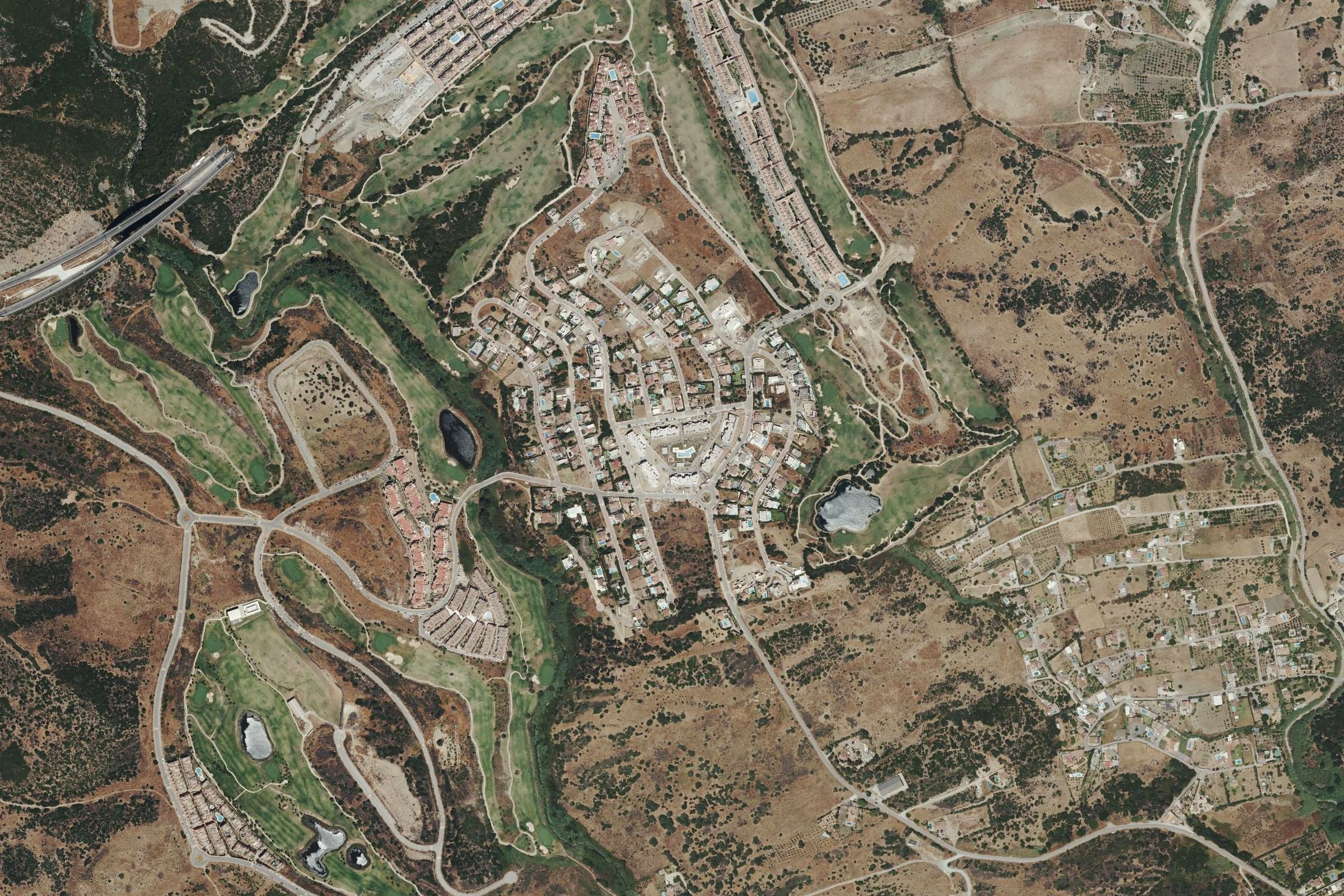
In Spain, a developer that takes your money before a home is finished must guarantee its return, with taxes and legal interest, through an insurance policy or a bank guarantee from the moment it holds a building licence, and must take the payments through a special bank account kept apart from its other money 1. If the building is not started or not finished by the agreed date, you can end the contract and claim the money back from the insurer or the bank 1. Buying safely means checking, before each payment, that this guarantee exists in your name.
What buying off-plan means
Buying off-plan means agreeing to buy a home that is still a project or under construction, and paying part of the price in stages before it is finished. The rules below apply to every developer of homes in Spain, including homes built by an owners’ community or a cooperative 1. Andalusia adds its own rules on the information a buyer must be given 3.
The price on a new home pays VAT rather than transfer tax, and on an off-plan purchase the VAT falls due with each stage payment: see what it costs to buy a home in Andalusia in 2026.
The guarantee on your payments
Spain’s Building Act (Ley de Ordenación de la Edificación) sets two conditions for any developer that wants money from buyers during construction 1:
- A guarantee: from the moment it obtains the building licence, the developer must guarantee the return of the amounts paid plus legal interest, for the case that construction does not start or is not completed within the agreed term 1. The guarantee is either a surety insurance policy (seguro de caución) from an insurer authorised in Spain, or a joint and several bank guarantee (aval solidario) from an authorised bank 1.
- A special account: the payments must be made through a bank into a special account, separate from all the developer’s other funds, which it may use only for building those homes 1. The bank must require the guarantee before it opens the account, under its own responsibility 1.
The guarantee covers everything you pay, including the taxes on it, plus legal interest from the day of each payment to the planned delivery date 1. The legal interest rate is set each year by the state budget law; for 2026 it is 3.25% 2.
| Surety insurance | Bank guarantee | |
|---|---|---|
| Who gives it | An insurer authorised in Spain 1 | A bank authorised in Spain 1 |
| In whose name | An individual policy for each buyer, naming the property 1 | Issued for the full amount paid, taxes included 1 |
| How long it runs | At least as long as the commitment to build and deliver; the developer pays the premium until the deed is signed 1 | Kept in force by the bank for the full amount until delivery 1 |
| Paying out | Within 30 days of your claim 1 | On your claim, after the developer’s 30 days 1 |
| When it ends | When the home is delivered with its occupation licence 1 | Also two years after the developer’s breach if you have not claimed 1 |
The insurer cannot use against you any defence it has against the developer, and the developer’s failure to pay the premium is never a reason to refuse you 1.
What the contract must say
Any contract in which you agree to pay the developer before completion must state expressly 1:
- That the developer will return what you paid, with taxes and legal interest, if construction does not start or finish by the dates in the contract, or if the home does not obtain its licence of first occupation or the equivalent document that allows it to be lived in.
- The insurance policy or bank guarantee, naming the insurer or the bank.
- The bank and the account into which you must make your payments.
When the purchase contract is signed, the developer must hand you the document proving the guarantee, issued for you and for the amounts you will pay 1. Advertising for homes sold with payments before or during construction must also name the insurer or guarantor and the bank holding the special account 1.
A developer that does not set up the guarantee commits a consumer infringement, with a fine of up to 25% of the amounts that should have been guaranteed 1.
What Andalusia requires a developer to give you
In Andalusia, anyone offering homes in project or under construction, even as an intermediary, must give any consumer who asks a free summary information document (Documento Informativo Abreviado) 3. Among other things, it must include 3:
- the developer’s name, address and commercial registry details, and those of any agent selling for it;
- the architect and, once chosen, the site director and the builder;
- a scaled site plan and a furnished floor plan of the home at a scale of at least 1:100, and the useful floor area of the home and its annexes;
- the quality of the materials and installations;
- the price, with the taxes and other costs and the way of payment;
- that the payments will be guaranteed by law, the name and address of the guarantor and the special account for the payments;
- the developer’s title to the plot, and the charges on it;
- whether a building licence allowing the works to start is available;
- the delivery date, giving at least the quarter and the year;
- that you will not pay the costs of the titles that belong to the seller, and your right to choose the notary.
The developer must also make available a note on the price and the ways of payment, and any amount you pay before the contract is formalised is deducted from the total price unless it was clearly paid for something else 3. At least three working days before you sign the purchase contract, you must receive these documents, copies of the licences needed to occupy the home, and its insurance and guarantees; whatever does not exist yet because of the stage of the works must be delivered as soon as possible 3. The developer must also tell you if it has started to be wound up 3.
These rules are enforced. In its 2024 inspection campaign on information in home sales and lettings, Andalusia’s consumer service found 69 of 112 inspection files compliant (61.6%), and among the most common failures was incomplete information in what is shown to the public, such as the price, the taxes and the buyer’s right to a copy of the summary information document 4.
The licence and the end of the works
In Andalusia, a new building needs a prior municipal building licence (licencia urbanística) 5. Once a building that has a licence is finished as licensed, it is occupied on a responsible declaration (declaración responsable) to the town hall, filed with the certificate of the end of the works 5. This is the document that ends the guarantee on your payments: once the occupation licence or its equivalent exists and the developer proves it delivered the home, the insurance or bank guarantee is cancelled, even if you refuse to take the home 1.
The finished building must carry ten-year insurance against damage to its structure: it is compulsory for buildings that are mainly homes, and a notary may not authorise, nor a registry record, the deed declaring a new building without proof of it 6. On top of that, the builder answers for defects in finishes for one year, the people who took part in the building for defects that affect habitability for three years, and for structural defects for ten, all from the formal acceptance of the works 6.
The costs that belong to the developer
Spain’s consumer law lists clauses that are always unfair in a home sale to a consumer, and so void 7. They include clauses that make the buyer pay 7:
- the costs of the titles that belong to the developer: the declaration of the new building, the division into separate properties (propiedad horizontal), and the mortgages that finance the construction, their division and their cancellation;
- taxes for which the developer is the taxpayer;
- the costs of connecting the home to the general supplies, when it must be delivered ready to live in.
A clause that forces you to take over the developer’s mortgage, or penalises you for not doing so, is unfair as well, and so is a clause in which you give up your right to choose the notary 7.
What to check before each payment
- The building licence. Ask for it, or for the document stating that the development meets the conditions to obtain it, which the developer must mention in its information document 3. The law owes you the guarantee from the licence onwards 1, so money asked for before a licence exists deserves a lawyer’s attention.
- The plot. The developer must state its title to the land and the charges on it 3. A nota simple from the Land Registry shows who owns the plot and what is registered against it.
- The guarantee, for you. Ask for the individual insurance certificate or bank guarantee in your name, naming the property and covering every payment with its taxes and interest 1. Check that the insurer or bank is the one named in the contract.
- The account. Pay only into the special account named in the contract 1.
- The dates. Read the agreed delivery date and how it can be extended: your guarantee and your right to end the contract run from it 1.
- The specification. Compare the plans, floor area and materials in the contract with the information document 3.
- The costs. Strike out any clause that passes the developer’s own costs to you 7.
If the developer misses the delivery date, act within two years: a bank guarantee lapses if you have not asked by then for the contract to be ended and your money returned 1.
If the developer does not deliver
If construction has not started, or the home has not been delivered by the agreed date, you choose: end the contract and get back what you paid, with taxes and legal interest, or give the developer more time, written into the contract as an added clause with the new completion and delivery date 1.
To get your money back, you first send the developer a formal, provable demand (requerimiento fehaciente) for the return of what you paid with taxes and interest 1. If it has not paid within 30 days, you claim from the insurer or the bank 1. An insurer must pay within 30 days of your claim 1. If a demand to the developer is not possible, you can claim from the insurer or the bank directly 1. The insurance does not cover amounts you cannot prove you paid 1.
For what is being built on the coast, town by town, the area guides lead on to each place’s new developments.
Talk to an independent lawyer for advice on your own purchase.
Questions
Is my money protected when I buy off-plan in Spain?
Spanish law requires a developer that takes payments before completion to guarantee their return, with taxes and legal interest, through an insurance policy or a bank guarantee, from the moment it holds a building licence. The payments must go into a special bank account kept apart from the developer’s other money. If the building is not started or not finished by the agreed date, you can claim the money back from the insurer or the bank.
What is the difference between a bank guarantee and an insurance policy for off-plan payments?
Both do the same job under the law: they guarantee the return of what you paid, with taxes and legal interest. The insurance (seguro de caución) must be an individual policy in your name that identifies the property. The bank guarantee (aval) must cover the full amount paid; it lapses two years after the developer fails to deliver if you have not asked for the contract to be ended and your money returned by then.
How do you get your money back if the developer does not deliver?
You send the developer a formal demand for the return of what you paid, with taxes and interest. If the developer has not paid within 30 days, you claim from the insurer or the bank that gave the guarantee; an insurer must pay within 30 days of your claim. If a demand to the developer is not possible, you can claim directly. You can also choose to give the developer more time, written into the contract as an added clause.
Can a developer take a deposit before it has a building licence?
The law ties the developer’s duty to guarantee your payments to the building licence: the guarantee is owed from the moment the licence is obtained. In Andalusia, the information document a developer must give buyers has to say whether a licence allowing the works to start is available. Ask for the licence, or the document that replaces it, before you pay anything, and have a lawyer check what protects money paid before it exists.
What documents should a developer give you in Andalusia before you sign?
A free summary information document (Documento Informativo Abreviado) with the developer’s details, scaled plans, the useful floor area, the building quality, the price with taxes and the payment terms, the guarantor and the special account, the licence and the delivery date. Also a note on the price and payments. At least three working days before signing the purchase contract, the developer must give you these and, as they become available, the licences, guarantees and insurance.
Who pays for the new-build deed and the division of the building?
The developer. Spain’s consumer law treats as unfair any clause that makes a buyer pay for the deeds the developer needs, such as the declaration of the new building, the division into separate properties and the developer’s construction mortgage, or that forces a buyer to take over the developer’s mortgage. You also have the right to choose the notary.
Sources
- Ley 38/1999, de Ordenación de la Edificación, disposición adicional primera (as amended by Ley 20/2015, in force from 1 January 2016), BOE consolidated text Read 23 November 2026.
- Banco de España, Portal del Cliente Bancario: Tabla tipos de interés legal Read 23 November 2026.
- Decreto 218/2005, de 11 de octubre, Reglamento de información al consumidor en la compraventa y arrendamiento de viviendas en Andalucía (BOJA núm. 217, 7 November 2005) Read 23 November 2026.
- Junta de Andalucía, Consumo Responde: Campaña de inspección sobre la información en la compraventa y arrendamiento de viviendas 2025 Read 23 November 2026.
- Ley 7/2021, de impulso para la sostenibilidad del territorio de Andalucía (LISTA), arts. 137 and 138, BOE consolidated text (last updated 7 April 2026) Read 23 November 2026.
- Ley 38/1999, de Ordenación de la Edificación, arts. 17, 19 and 20 and disposición adicional segunda, BOE consolidated text Read 23 November 2026.
- Real Decreto Legislativo 1/2007, texto refundido de la Ley General para la Defensa de los Consumidores y Usuarios, arts. 83 and 89, BOE consolidated text (last updated 4 November 2026) Read 23 November 2026.
More from the journal
 19 October 2026 · 7 min read
What does it cost to buy a home in Andalusia in 2026?
Transfer tax, VAT, stamp duty, notary, registry, lawyer, NIE, mortgage and IBI costs of buying a home in Andalusia, as of November 2026. 20 November 2026 · 7 min read
What is a nota simple and how do you get one?
What a Spanish Land Registry nota simple shows and leaves out, how to order one online, what it costs and how current it is, as of November 2026. 19 October 2026 · 6 min read
How does buying a home in Spain work, step by step?
The steps to buy a home in Spain: NIE and bank account, reservation, arras contract, legal checks, notary, tax, Land Registry and utilities.